
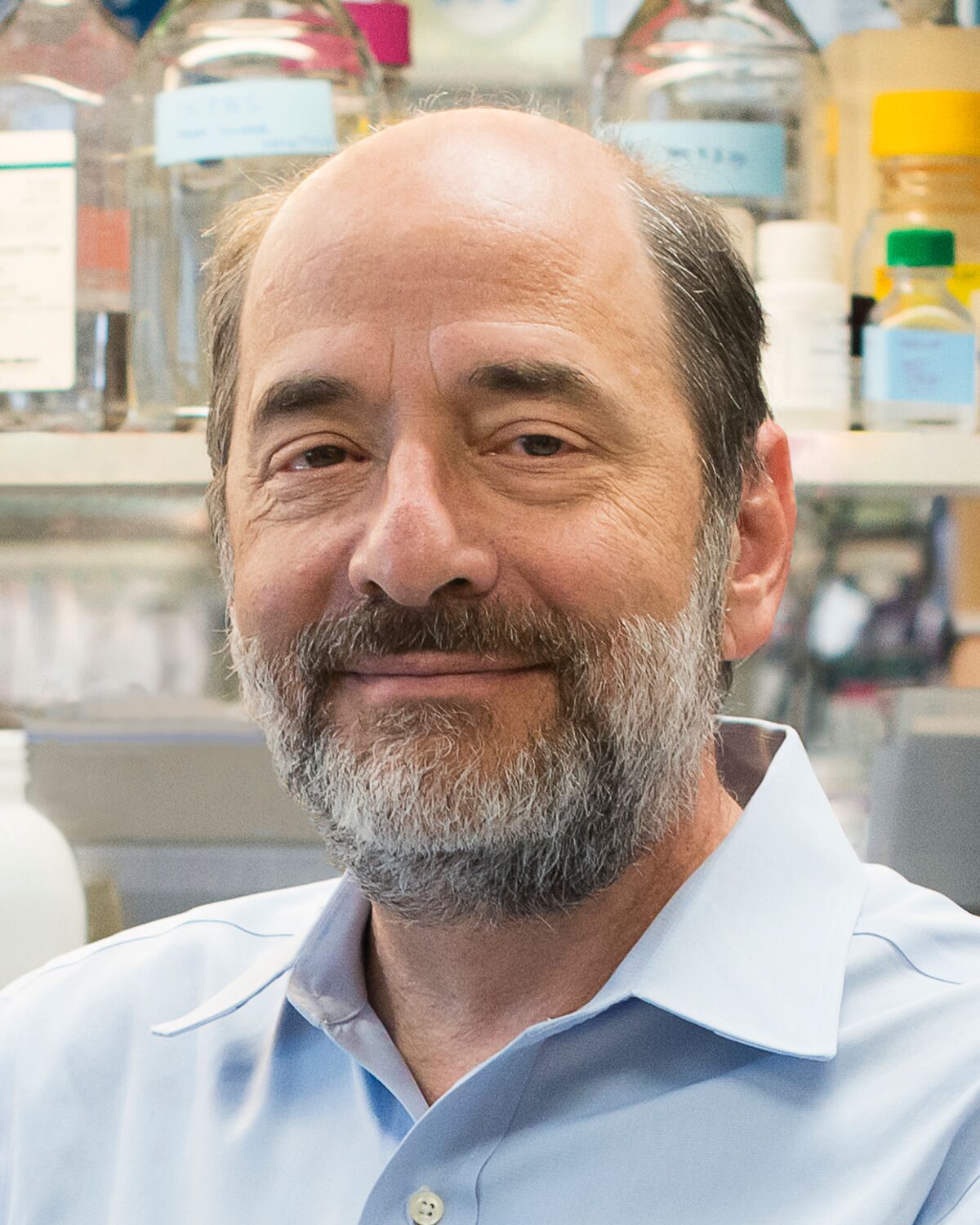
Michael Greenberg

Michael Greenberg, Ph.D.

Nathan Marsh Pusey Professor of Neurobiology, Harvard Medical School
Professor of Neurology, Boston Children's Hospital
Director of the Hock E. Tan and K. Lisa Yang Center for Autism Research, Harvard Medical School

Michael Greenberg, Ph.D. – Faculty Profile

If you prefer, you can view the visual layout directly on Canva: Open Michael Greenberg – Faculty Profile on Canva (opens in a new window) .

Title: Nathan Marsh Pusey Professor of Neurobiology, Harvard Medical School; Director of the Hock E. Tan and K. Lisa Yang Center for Autism Research, Harvard Medical School; Professor of Neurology, Boston Children's Hospital.

The Aim

The Greenberg Lab studies how life experiences turn genes on or off to shape learning and brain development. The lab focuses on the molecular mechanisms by which sensory experiences regulate gene expression in the brain.

The Impact

This research has illuminated how the brain rewires itself in response to experience, a process essential for learning, memory, and behavior. Several of the genes and pathways the lab has identified are mutated in autism and other neurodevelopmental disorders, positioning this work as foundational for developing new therapies for these conditions.

A Closer Look

Article: State of Stasis , Harvard Medical School / Harvard Gazette, June 2020. This piece describes how Mike Greenberg and colleagues identified a tiny cluster of hypothalamic neurons that can flip mice into and out of a hibernation‑like state, or torpor, revealing brain circuits that dial down body temperature and metabolism and opening avenues for understanding suspended animation and its medical uses.

Article: Decoding Brain Evolution , Harvard Medical School, December 2021. This article highlights Mike Greenberg’s co‑leadership of the Allen Discovery Center for Human Brain Evolution, which links evolutionary genetic variants to their effects in neurons to explain how human brains acquired uniquely human cognitive and behavioral capacities.

Contact

Email: michael_greenberg@hms.harvard.edu
Lab website: greenberg.hms.harvard.edu

Publications View
Serum- and glucocorticoid-inducible kinase SGK phosphorylates and negatively regulates B-Raf.
Authors: Authors: Zhang BH, Tang ED, Zhu T, Greenberg ME, Vojtek AB, Guan KL.
J Biol Chem
View full abstract on Pubmed
REST acts through multiple deacetylase complexes.
Authors: Authors: Griffith EC, Cowan CW, Greenberg ME.
Neuron
View full abstract on Pubmed
Myc requires distinct E2F activities to induce S phase and apoptosis.
Authors: Authors: Leone G, Sears R, Huang E, Rempel R, Nuckolls F, Park CH, Giangrande P, Wu L, Saavedra HI, Field SJ, Thompson MA, Yang H, Fujiwara Y, Greenberg ME, Orkin S, Smith C, Nevins JR.
Mol Cell
View full abstract on Pubmed
Transcription-dependent and -independent control of neuronal survival by the PI3K-Akt signaling pathway.
Authors: Authors: Brunet A, Datta SR, Greenberg ME.
Curr Opin Neurobiol
View full abstract on Pubmed
Calcium phosphate transfection of DNA into neurons in primary culture.
Authors: Authors: Dudek H, Ghosh A, Greenberg ME.
Curr Protoc Neurosci
View full abstract on Pubmed
EphA receptors regulate growth cone dynamics through the novel guanine nucleotide exchange factor ephexin.
Authors: Authors: Shamah SM, Lin MZ, Goldberg JL, Estrach S, Sahin M, Hu L, Bazalakova M, Neve RL, Corfas G, Debant A, Greenberg ME.
Cell
View full abstract on Pubmed
Neurogenin promotes neurogenesis and inhibits glial differentiation by independent mechanisms.
Authors: Authors: Sun Y, Nadal-Vicens M, Misono S, Lin MZ, Zubiaga A, Hua X, Fan G, Greenberg ME.
Cell
View full abstract on Pubmed
Protein kinase SGK mediates survival signals by phosphorylating the forkhead transcription factor FKHRL1 (FOXO3a).
Authors: Authors: Brunet A, Park J, Tran H, Hu LS, Hemmings BA, Greenberg ME.
Mol Cell Biol
View full abstract on Pubmed
EphB receptors interact with NMDA receptors and regulate excitatory synapse formation.
Authors: Authors: Dalva MB, Takasu MA, Lin MZ, Shamah SM, Hu L, Gale NW, Greenberg ME.
Cell
View full abstract on Pubmed
Magnitude of the CREB-dependent transcriptional response is determined by the strength of the interaction between the kinase-inducible domain of CREB and the KIX domain of CREB-binding protein.
Authors: Authors: Shaywitz AJ, Dove SL, Kornhauser JM, Hochschild A, Greenberg ME.
Mol Cell Biol
View full abstract on Pubmed