
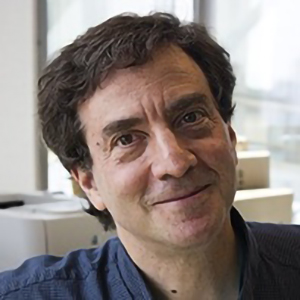
Thomas Schwarz, Ph.D.
Thomas Schwarz, Ph.D. – Faculty Profile
If you prefer, you can view the visual layout directly on Canva: Thomas Schwarz – Faculty Profile by Neuro Coordinator (opens in a new window).
Title: Professor of Neurology and Neurobiology in the Department of Neurology, Boston Children's Hospital.
The Aim
The Schwarz Lab studies the inner workings of neurons, including how they transport essential materials and how mitochondria sustain them. The lab aims to reveal how breakdowns in these processes contribute to disorders such as Parkinson’s disease and optic neuropathy.
The Impact
The Schwarz Lab investigates how nerve cells keep their many parts healthy and connected, focusing on how organelles like mitochondria or molecules like RNA are delivered across long distances. By uncovering the basics of nerve cell maintenance and transport, their work sheds light on how failures in these systems can lead to disorders like Parkinson’s disease and neuropathy. Their research bridges fundamental cell biology and neuroscience, helping to reveal how brain cells grow, adapt, and break down in both health and disease.
A Closer Look
Article: How Mitochondria Stay Still in Neurons , The Scientist, March 2024. This article explains how brain cells use a helper protein to hold their “power plants” (mitochondria) in the right spots so they can reliably fuel learning and memory.
Article: New Research Offers Hope to Preserve Vision in Autosomal Dominant Optic Atrophy , News Medical Life Sciences, July 2025. The article describes how Dr. Thomas Schwarz’s team discovered that shutting down a single protein called SARM1 in a mouse model can protect the eye’s vision‑carrying nerve cells, offering a promising new path to preserve sight in people with autosomal dominant optic atrophy.
Contact
Email:
thomas.schwarz@childrens.harvard.edu
Lab website:
www.schwarzlab.org
Cold Spring Harb Symp Quant Biol
View full abstract on Pubmed
Proc Natl Acad Sci U S A
View full abstract on Pubmed
J Neurosci
View full abstract on Pubmed
Neuropharmacology
View full abstract on Pubmed
Gene
View full abstract on Pubmed
Nature
View full abstract on Pubmed