
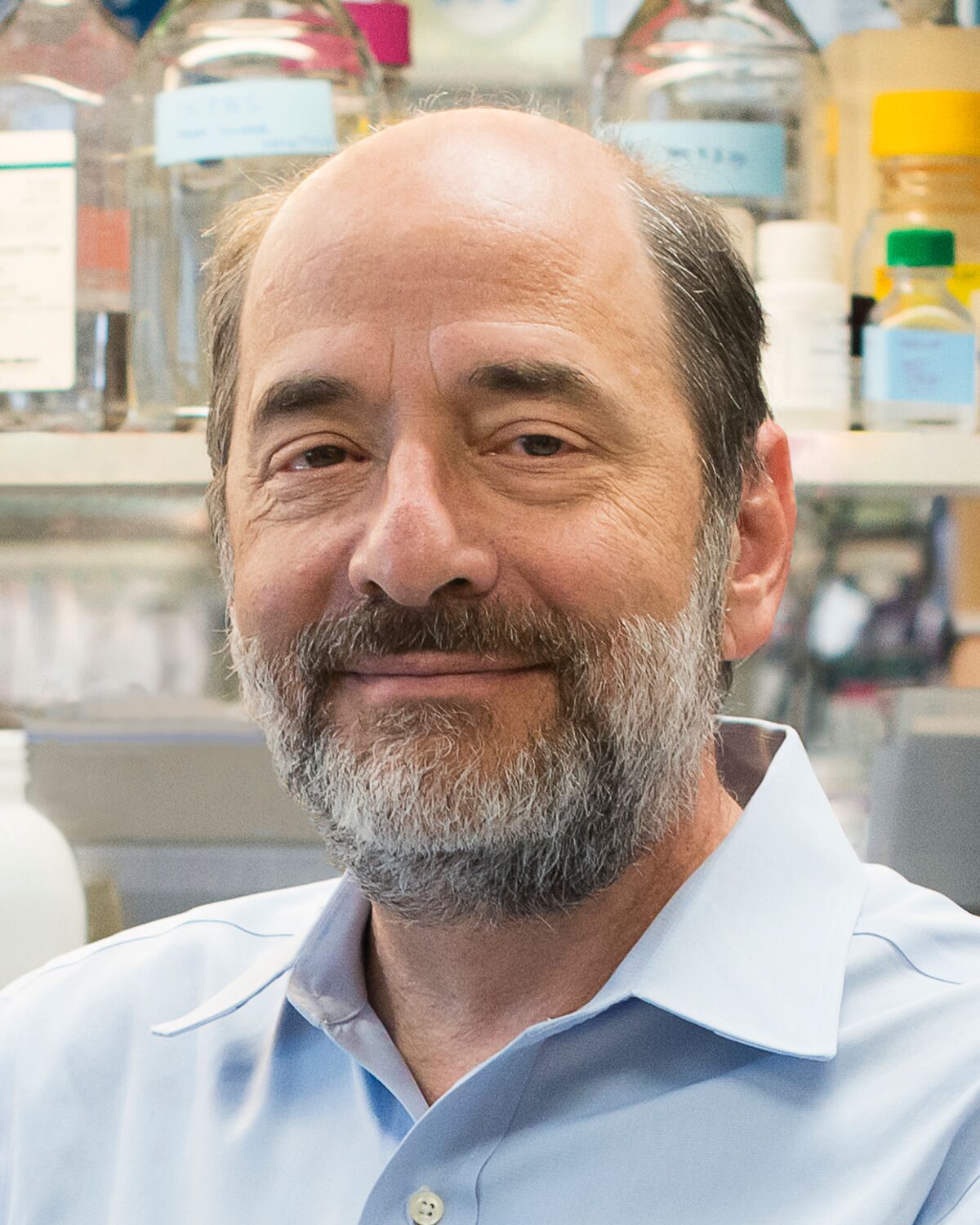
Michael Greenberg

Michael Greenberg, Ph.D.

Nathan Marsh Pusey Professor of Neurobiology, Harvard Medical School
Professor of Neurology, Boston Children's Hospital
Director of the Hock E. Tan and K. Lisa Yang Center for Autism Research, Harvard Medical School

Michael Greenberg, Ph.D. – Faculty Profile

If you prefer, you can view the visual layout directly on Canva: Open Michael Greenberg – Faculty Profile on Canva (opens in a new window) .

Title: Nathan Marsh Pusey Professor of Neurobiology, Harvard Medical School; Director of the Hock E. Tan and K. Lisa Yang Center for Autism Research, Harvard Medical School; Professor of Neurology, Boston Children's Hospital.

The Aim

The Greenberg Lab studies how life experiences turn genes on or off to shape learning and brain development. The lab focuses on the molecular mechanisms by which sensory experiences regulate gene expression in the brain.

The Impact

This research has illuminated how the brain rewires itself in response to experience, a process essential for learning, memory, and behavior. Several of the genes and pathways the lab has identified are mutated in autism and other neurodevelopmental disorders, positioning this work as foundational for developing new therapies for these conditions.

A Closer Look

Article: State of Stasis , Harvard Medical School / Harvard Gazette, June 2020. This piece describes how Mike Greenberg and colleagues identified a tiny cluster of hypothalamic neurons that can flip mice into and out of a hibernation‑like state, or torpor, revealing brain circuits that dial down body temperature and metabolism and opening avenues for understanding suspended animation and its medical uses.

Article: Decoding Brain Evolution , Harvard Medical School, December 2021. This article highlights Mike Greenberg’s co‑leadership of the Allen Discovery Center for Human Brain Evolution, which links evolutionary genetic variants to their effects in neurons to explain how human brains acquired uniquely human cognitive and behavioral capacities.

Contact

Email: michael_greenberg@hms.harvard.edu
Lab website: greenberg.hms.harvard.edu

Publications View
Growth factors and membrane depolarization activate distinct programs of early response gene expression: dissociation of fos and jun induction.
Authors: Authors: Bartel DP, Sheng M, Lau LF, Greenberg ME.
Genes Dev
View full abstract on Pubmed
The c-fos transcript is targeted for rapid decay by two distinct mRNA degradation pathways.
Authors: Authors: Shyu AB, Greenberg ME, Belasco JG.
Genes Dev
View full abstract on Pubmed
c-Jun dimerizes with itself and with c-Fos, forming complexes of different DNA binding affinities.
Authors: Authors: Halazonetis TD, Georgopoulos K, Greenberg ME, Leder P.
Cell
View full abstract on Pubmed
Calcium and growth factor pathways of c-fos transcriptional activation require distinct upstream regulatory sequences.
Authors: Authors: Sheng M, Dougan ST, McFadden G, Greenberg ME.
Mol Cell Biol
View full abstract on Pubmed
Mutation of the c-fos gene dyad symmetry element inhibits serum inducibility of transcription in vivo and the nuclear regulatory factor binding in vitro.
Authors: Authors: Greenberg ME, Siegfried Z, Ziff EB.
Mol Cell Biol
View full abstract on Pubmed
Alternative modes of c-myc regulation in growth factor-stimulated and differentiating cells.
Authors: Authors: Nepveu A, Levine RA, Campisi J, Greenberg ME, Ziff EB, Marcu KB.
Oncogene
View full abstract on Pubmed
Stimulation of neuronal acetylcholine receptors induces rapid gene transcription.
Authors: Authors: Greenberg ME, Ziff EB, Greene LA.
Science
View full abstract on Pubmed
Effect of protein synthesis inhibitors on growth factor activation of c-fos, c-myc, and actin gene transcription.
Authors: Authors: Greenberg ME, Hermanowski AL, Ziff EB.
Mol Cell Biol
View full abstract on Pubmed
Nerve growth factor and epidermal growth factor induce rapid transient changes in proto-oncogene transcription in PC12 cells.
Authors: Authors: Greenberg ME, Greene LA, Ziff EB.
J Biol Chem
View full abstract on Pubmed
Increased phosphorylation of tyrosine in vinculin does not occur upon transformation by some avian sarcoma viruses.
Authors: Authors: Antler AM, Greenberg ME, Edelman GM, Hanafusa H.
Mol Cell Biol
View full abstract on Pubmed