
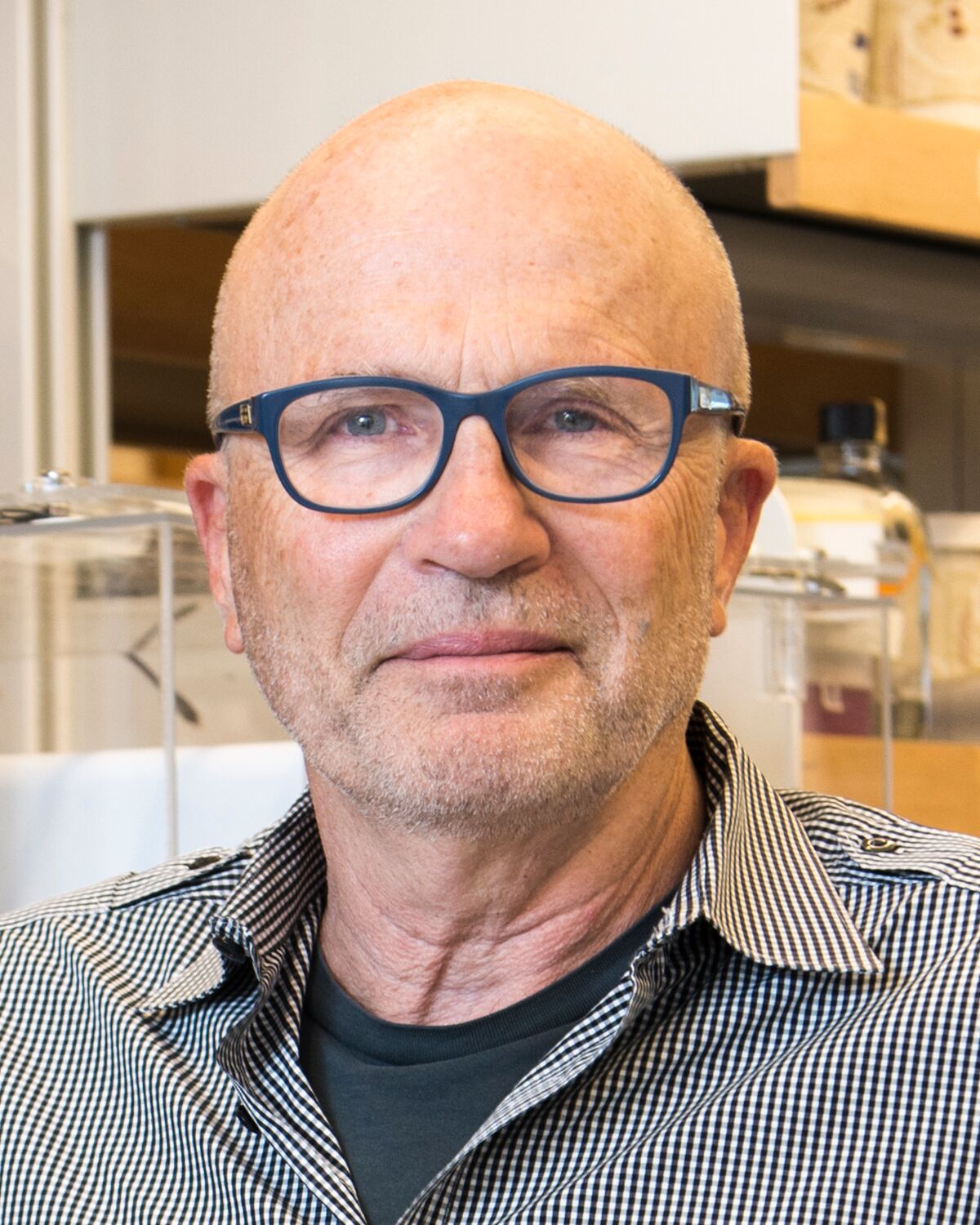
Clifford Woolf

Clifford Woolf, MB, BCh, PhD

Professor of Neurology, Harvard Medical School

Clifford Woolf, MB, BCh, PhD – Faculty Profile

If you prefer, you can view the visual layout directly on Canva: Clifford Woolf – Faculty Profile by Neuro Coordinator (opens in a new window).

Title: Professor of Neurology, Harvard Medical School.

The Aim

The Woolf Lab investigates how nerve cell plasticity enables adaptation or leads to chronic pain and nerve damage, aiming to discover new therapies for neurological diseases.

The Impact

The Woolf Lab studies how pain perception occurs by examining how the nervous system adapts to injury or situations of chronic pain. By exploring how sensory and motor neurons respond to injury, inflammation, and disease, the lab seeks to discover new ways to treat pain, promote nerve repair, and protect brain and nerve function. Their work paves the way for innovative therapies for neurological diseases by identifying the genes and signals that control how neurons grow and survive.

A Closer Look

Article: Pain Points , Harvard Medical School, July 2017. This article profiles Clifford Woolf’s quest to understand pain as both protection and disease, highlighting his optogenetics research showing that tiny pain signals can trigger rapid, complex whole‑body responses.

Article: Startup launches to tackle cough, itch, pain , Harvard Office of Technology Development, April 2019. The piece describes how Nocion Therapeutics, co‑founded by Clifford Woolf and Bruce Bean, is developing targeted, non‑opioid drugs that selectively silence overactive neurons driving cough, itch, and pain.

Contact

Email: clifford.woolf@childrens.harvard.edu
Lab website: kirbyneuro.org/WoolfLab/

Publications View
A conditional deletion of the NR1 subunit of the NMDA receptor in adult spinal cord dorsal horn reduces NMDA currents and injury-induced pain.
Authors: Authors: South SM, Kohno T, Kaspar BK, Hegarty D, Vissel B, Drake CT, Ohata M, Jenab S, Sailer AW, Malkmus S, Masuyama T, Horner P, Bogulavsky J, Gage FH, Yaksh TL, Woolf CJ, Heinemann SF, Inturrisi CE.
J Neurosci
View full abstract on Pubmed
p38 mitogen-activated protein kinase is activated after a spinal nerve ligation in spinal cord microglia and dorsal root ganglion neurons and contributes to the generation of neuropathic pain.
Authors: Authors: Jin SX, Zhuang ZY, Woolf CJ, Ji RR.
J Neurosci
View full abstract on Pubmed
No Nogo: now where to go?
Authors: Authors: Woolf CJ.
Neuron
View full abstract on Pubmed
Peripheral nerve injury alters excitatory synaptic transmission in lamina II of the rat dorsal horn.
Authors: Authors: Kohno T, Moore KA, Baba H, Woolf CJ.
J Physiol
View full abstract on Pubmed
Exploiting microarrays to reveal differential gene expression in the nervous system.
Authors: Authors: Griffin RS, Mills CD, Costigan M, Woolf CJ.
Genome Biol
View full abstract on Pubmed
The prostaglandin E2 receptor-1 (EP-1) mediates acid-induced visceral pain hypersensitivity in humans.
Authors: Authors: Sarkar S, Hobson AR, Hughes A, Growcott J, Woolf CJ, Thompson DG, Aziz Q.
Gastroenterology
View full abstract on Pubmed
Gabapentin-- actions on adult superficial dorsal horn neurons.
Authors: Authors: Moore KA, Baba H, Woolf CJ.
Neuropharmacology
View full abstract on Pubmed
Can we conquer pain?
Authors: Authors: Scholz J, Woolf CJ.
Nat Neurosci
View full abstract on Pubmed
Progressive tactile hypersensitivity after a peripheral nerve crush: non-noxious mechanical stimulus-induced neuropathic pain.
Authors: Authors: Decosterd I, Allchorne A, Woolf CJ.
Pain
View full abstract on Pubmed
Replicate high-density rat genome oligonucleotide microarrays reveal hundreds of regulated genes in the dorsal root ganglion after peripheral nerve injury.
Authors: Authors: Costigan M, Befort K, Karchewski L, Griffin RS, D'Urso D, Allchorne A, Sitarski J, Mannion JW, Pratt RE, Woolf CJ.
BMC Neurosci
View full abstract on Pubmed