
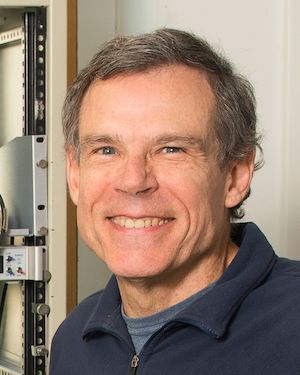
Bruce Bean

Bruce Bean, PhD

Robert Winthrop Professor of Neurobiology

Bruce Bean, PhD – Faculty Profile

If you prefer, you can view the visual layout directly on Canva: Open Bruce Bean – Faculty Profile on Canva (opens in a new window) .

Title: Robert Winthrop Professor of Neurobiology, Harvard Medical School.

The Aim

The Bean Lab studies the pharmacology of ion channels that govern the electrical activity of neurons. Neuronal activity is regulated by molecular gates in the cell membrane called ion channels.

The Impact

Different types of neurons express different combinations of ion channels, which is why they fire differently and serve different functions. The Bean Lab uses pharmacology to study how ion channels differentially regulate electrical activity in particular kinds of neurons, both characterizing existing ion channel–targeted drugs and developing new ones. This approach has contributed to the development of new compounds that target channels in pain‑sensing neurons without the side effects and risks associated with opioids. Ongoing projects aim to develop new drugs targeting chronic pain, epilepsy, and multiple sclerosis.

A Closer Look

Article: “This Will Have a Negative Effect on the Entire Drug‑Development Enterprise” , Harvard Medicine Magazine, July 2025. This perspective explains how Bruce Bean’s lab uses basic research on neuronal ion channels and hyperexcitability to identify new, safer drug targets for pain and epilepsy, positioning the lab as an early‑stage engine for future non‑opioid therapies.

Article: The Discovery Channel: Why do Harvard doctors remain undaunted by the demands of discovery? , Harvard Medicine Magazine, Spring 2011. This feature describes how Harvard is boosting drug discovery by supporting risky early‑stage projects and collaborations; Bruce Bean’s ion‑channel research is highlighted as an example of identifying new targets for pain and epilepsy treatments that industry can later develop into drugs.

Contact

Email: bruce_bean@hms.harvard.edu

Publications View
Pacemaking in dopaminergic ventral tegmental area neurons: depolarizing drive from background and voltage-dependent sodium conductances.
Authors: Authors: Khaliq ZM, Bean BP.
J Neurosci
View full abstract on Pubmed
Sodium channels gone wild: resurgent current from neuronal and muscle channelopathies.
Authors: Authors: Cannon SC, Bean BP.
J Clin Invest
View full abstract on Pubmed
Sodium entry during action potentials of mammalian neurons: incomplete inactivation and reduced metabolic efficiency in fast-spiking neurons.
Authors: Authors: Carter BC, Bean BP.
Neuron
View full abstract on Pubmed
Coapplication of lidocaine and the permanently charged sodium channel blocker QX-314 produces a long-lasting nociceptive blockade in rodents.
Authors: Authors: Binshtok AM, Gerner P, Oh SB, Puopolo M, Suzuki S, Roberson DP, Herbert T, Wang CF, Kim D, Chung G, Mitani AA, Wang GK, Bean BP, Woolf CJ.
Anesthesiology
View full abstract on Pubmed
Inhibition by an excitatory conductance: a paradox explained.
Authors: Authors: Bean BP.
Nat Neurosci
View full abstract on Pubmed
Genetic selection system for improving recombinant membrane protein expression in E. coli.
Authors: Authors: Massey-Gendel E, Zhao A, Boulting G, Kim HY, Balamotis MA, Seligman LM, Nakamoto RK, Bowie JU.
Protein Sci
View full abstract on Pubmed
Nociceptors are interleukin-1beta sensors.
Authors: Authors: Binshtok AM, Wang H, Zimmermann K, Amaya F, Vardeh D, Shi L, Brenner GJ, Ji RR, Bean BP, Woolf CJ, Samad TA.
J Neurosci
View full abstract on Pubmed
Human embryonic stem cell-derived motor neurons are sensitive to the toxic effect of glial cells carrying an ALS-causing mutation.
Authors: Authors: Di Giorgio FP, Boulting GL, Bobrowicz S, Eggan KC.
Cell Stem Cell
View full abstract on Pubmed
Capsaicin combined with local anesthetics preferentially prolongs sensory/nociceptive block in rat sciatic nerve.
Authors: Authors: Gerner P, Binshtok AM, Wang CF, Hevelone ND, Bean BP, Woolf CJ, Wang GK.
Anesthesiology
View full abstract on Pubmed
Dynamic, nonlinear feedback regulation of slow pacemaking by A-type potassium current in ventral tegmental area neurons.
Authors: Authors: Khaliq ZM, Bean BP.
J Neurosci
View full abstract on Pubmed