
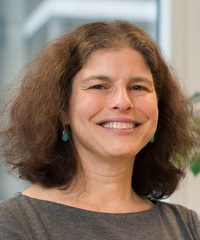
A smiling woman with shoulder-length wavy brown hair, wearing turquoise earrings and a dark gray top, against a softly blurred indoor background.

Rosalind Segal, M.D., Ph.D.

Professor of Neurobiology, Dana-Farber Cancer Institute
Dean for Graduate Education, Harvard Medical School

Rosalind Segal, MD, PhD – Faculty Profile

Professor of Neurobiology at the Dana-Farber Cancer Institute and Dean for Graduate Education at Harvard Medical School.

If you prefer, you can view the visual layout directly on Canva by Neuro Coordinator.

Contact

Email: roz_segal@hms.harvard.edu

Segal Lab website: segallab.dana-farber.org

The Aim

The Segal Lab studies neuronal signaling pathways in cancer and nerve cell responses to chemotherapy, aiming to develop better treatments for nervous system disorders and reduce a common side effect of chemotherapy: neuropathic pain.

The Impact

The Segal Lab is interested in extending our knowledge of neuronal signaling pathways to treat disorders of the nervous system. A particular area of interest is understanding how neurons contribute to cancers of the brain, and specifically how nerve cells respond to chemotherapies. This is especially important in cases where cancer treatments can cause damage to nerve cells, leading to neuropathic pain in patients.

The Segal Lab’s work aims to create more effective approaches to mitigate these side effects, as well as to better understand how signaling pathways in neurons can be leveraged to understand nervous system diseases.

A Closer Look

Dana-Farber Cancer Institute: Discovery Suggests Approach to Preventing Peripheral Neuropathy

This article describes research led by Rosalind Segal showing how a protein called Bcl-w helps protect nerve axons. The research suggests that restoring or mimicking Bcl-w may help prevent chemotherapy-induced peripheral neuropathy, which can cause numbness, tingling, and pain in the hands and feet.

Segal Lab research: Research at the Segal Lab

The Segal Lab researches how specific signaling pathways control brain tumor growth and neuron survival. This work aims to support the development of targeted therapies for brain cancers and treatments that prevent nerve degeneration.

Additional Profile Information

Rosalind Segal, MD, PhD, is a Professor of Neurobiology at the Dana-Farber Cancer Institute and Dean for Graduate Education at Harvard Medical School.

Publications View
How neuronal activity regulates glioma cell proliferation.
Authors: Authors: Filbin MG, Segal RA.
Neuro Oncol
View full abstract on Pubmed
A Brain Tumor/Organotypic Slice Co-culture System for Studying Tumor Microenvironment and Targeted Drug Therapies.
Authors: Authors: Chadwick EJ, Yang DP, Filbin MG, Mazzola E, Sun Y, Behar O, Pazyra-Murphy MF, Goumnerova L, Ligon KL, Stiles CD, Segal RA.
J Vis Exp
View full abstract on Pubmed
Expression profiles of 151 pediatric low-grade gliomas reveal molecular differences associated with location and histological subtype.
Authors: Authors: Bergthold G, Bandopadhayay P, Hoshida Y, Ramkissoon S, Ramkissoon L, Rich B, Maire CL, Paolella BR, Schumacher SE, Tabak B, Ferrer-Luna R, Ozek M, Sav A, Santagata S, Wen PY, Goumnerova LC, Ligon AH, Stiles C, Segal R, Golub T, Grill J, Ligon KL, Chan JA, Kieran MW, Beroukhim R.
Neuro Oncol
View full abstract on Pubmed
Prolyl Isomerase Pin1 Regulates Axon Guidance by Stabilizing CRMP2A Selectively in Distal Axons.
Authors: Authors: Balastik M, Zhou XZ, Alberich-Jorda M, Weissova R, Žiak J, Pazyra-Murphy MF, Cosker KE, Machonova O, Kozmikova I, Chen CH, Pastorino L, Asara JM, Cole A, Sutherland C, Segal RA, Lu KP.
Cell Rep
View full abstract on Pubmed
A Polyamine Twist on Hedgehog Signaling.
Authors: Authors: Zhao X, Segal RA.
Dev Cell
View full abstract on Pubmed
CD151-a3ß1 integrin complexes are prognostic markers of glioblastoma and cooperate with EGFR to drive tumor cell motility and invasion.
Authors: Authors: Zhou P, Erfani S, Liu Z, Jia C, Chen Y, Xu B, Deng X, Alfáro JE, Chen L, Napier D, Lu M, Huang JA, Liu C, Thibault O, Segal R, Zhou BP, Kyprianou N, Horbinski C, Yang XH.
Oncotarget
View full abstract on Pubmed
RAS/MAPK Activation Drives Resistance to Smo Inhibition, Metastasis, and Tumor Evolution in Shh Pathway-Dependent Tumors.
Authors: Authors: Zhao X, Ponomaryov T, Ornell KJ, Zhou P, Dabral SK, Pak E, Li W, Atwood SX, Whitson RJ, Chang AL, Li J, Oro AE, Chan JA, Kelleher JF, Segal RA.
Cancer Res
View full abstract on Pubmed
The Eya1 phosphatase promotes Shh signaling during hindbrain development and oncogenesis.
Authors: Authors: Eisner A, Pazyra-Murphy MF, Durresi E, Zhou P, Zhao X, Chadwick EC, Xu PX, Hillman RT, Scott MP, Greenberg ME, Segal RA.
Dev Cell
View full abstract on Pubmed
Shh-proteoglycan interactions regulate maturation of olfactory glomerular circuitry.
Authors: Authors: Persson L, Witt RM, Galligan M, Greer PL, Eisner A, Pazyra-Murphy MF, Datta SR, Segal RA.
Dev Neurobiol
View full abstract on Pubmed
Preserve and protect: maintaining axons within functional circuits.
Authors: Authors: Pease SE, Segal RA.
Trends Neurosci
View full abstract on Pubmed