
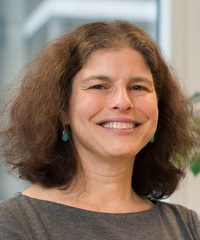
Rosalind Segal, M.D., Ph.D.
Rosalind Segal, MD, PhD – Faculty Profile
Professor of Neurobiology at the Dana-Farber Cancer Institute and Dean for Graduate Education at Harvard Medical School.
If you prefer, you can view the visual layout directly on Canva by Neuro Coordinator.
Contact
Email: roz_segal@hms.harvard.edu
Segal Lab website: segallab.dana-farber.org
The Aim
The Segal Lab studies neuronal signaling pathways in cancer and nerve cell responses to chemotherapy, aiming to develop better treatments for nervous system disorders and reduce a common side effect of chemotherapy: neuropathic pain.
The Impact
The Segal Lab is interested in extending our knowledge of neuronal signaling pathways to treat disorders of the nervous system. A particular area of interest is understanding how neurons contribute to cancers of the brain, and specifically how nerve cells respond to chemotherapies. This is especially important in cases where cancer treatments can cause damage to nerve cells, leading to neuropathic pain in patients.
The Segal Lab’s work aims to create more effective approaches to mitigate these side effects, as well as to better understand how signaling pathways in neurons can be leveraged to understand nervous system diseases.
A Closer Look
Dana-Farber Cancer Institute: Discovery Suggests Approach to Preventing Peripheral Neuropathy
This article describes research led by Rosalind Segal showing how a protein called Bcl-w helps protect nerve axons. The research suggests that restoring or mimicking Bcl-w may help prevent chemotherapy-induced peripheral neuropathy, which can cause numbness, tingling, and pain in the hands and feet.
Segal Lab research: Research at the Segal Lab
The Segal Lab researches how specific signaling pathways control brain tumor growth and neuron survival. This work aims to support the development of targeted therapies for brain cancers and treatments that prevent nerve degeneration.
Additional Profile Information
Rosalind Segal, MD, PhD, is a Professor of Neurobiology at the Dana-Farber Cancer Institute and Dean for Graduate Education at Harvard Medical School.
Am J Occup Ther
View full abstract on Pubmed
Clin Exp Immunol
View full abstract on Pubmed
J Clin Immunol
View full abstract on Pubmed
Top Hosp Pharm Manage
View full abstract on Pubmed
Cell
View full abstract on Pubmed